
According to official Job Bank Canada figures, commercial truck drivers across the country make anywhere from $19.45 to $37.00 an hour. Average pay usually lands around $25 to $26 hourly, meaning a full-time entry-level driver can expect to clear roughly $52,000 to $54,000 annually.
You’ve probably seen flashy claims online promising $80k or $90k straight out of the gate for truck driver jobs in Canada, but those figures are rare for newcomers. You usually need specialised experience, think hauling hazardous materials, handling oversized loads, driving multi-trailer rigs (LCVs), or logging years behind the wheel in tough Canadian winter conditions as an owner-operator, to touch that kind of money.
Still, Canada is facing a genuine driver shortage as the current workforce reaches retirement age, which keeps commercial driving one of the most accessible pathways for foreign workers aiming to relocate.
Realistic Pay Expectations by Role
Setting an accurate financial baseline helps you plan effectively when reviewing job offers:
|
Driver Role |
Typical Hourly Wage |
Estimated Annual Income |
Experience Level |
|
Short-Haul / Regional Driver |
$22.00 – $26.00 / hr |
$45,000 – $54,000 |
Entry-Level to Intermediate |
|
Standard Long-Haul (Domestic) |
$25.00 – $30.00 / hr |
$52,000 – $62,000 |
Intermediate |
|
Specialized (Hazmat / Tanker / Flatbed) |
$30.00 – $38.00 / hr |
$62,000 – $79,000 |
Experienced |
|
Heavy Haul / LCV Operator |
$37.00 – $48.00+ / hr |
$80,000 – $100,000+ |
Senior / Master Driver |
Regional Variations: Alberta, Saskatchewan, and Ontario generally offer the highest density of commercial transport roles. However, because living expenses in urban centres can be high, regional driving positions in provinces like Alberta or Saskatchewan often yield higher net monthly savings.
Commercial Licensing: The MELT Requirement
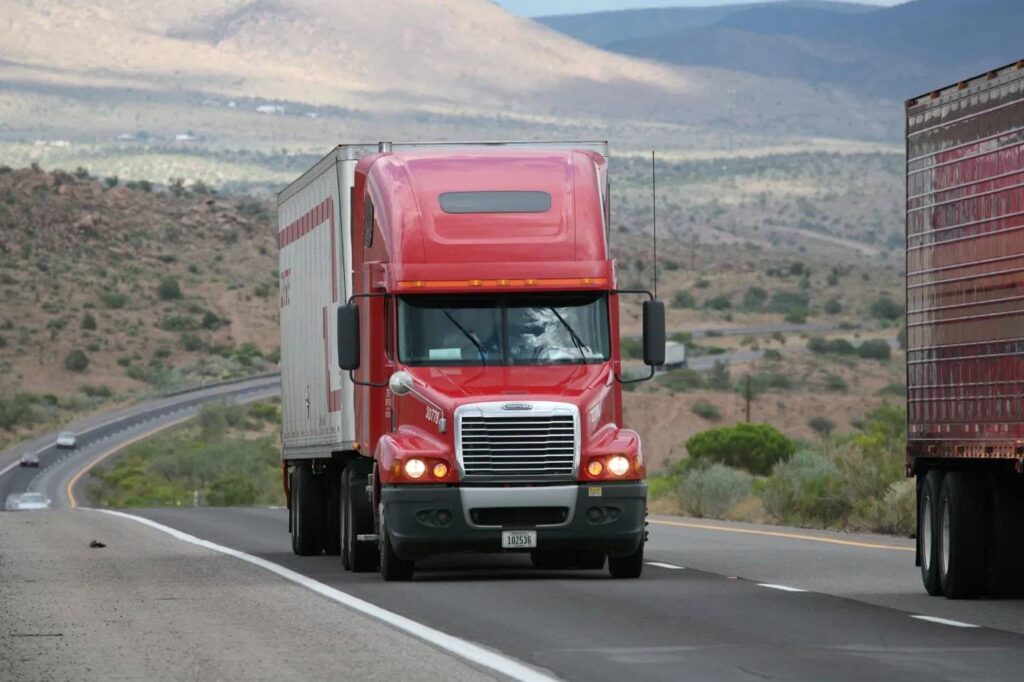
If you want to drive commercial trucks in Canada, getting a handle on MELT (Mandatory Entry-Level Training) is the absolute first step. You can’t just swap a foreign commercial license for a Canadian Class 1 or Class A heavy vehicle permit, it doesn’t work like that.
Thanks to Canada’s National Safety Code, every province forces new commercial drivers to finish an approved MELT course before they can even attempt a practical road test:
-
Course Structure: Most MELT programs run anywhere from 103.5 to 140 hours. They cover classroom theory, yard vehicle checks, air brake certification (Z or A endorsements), and actual highway driving time.
-
Employer Onboarding: If you’re applying for truck driver jobs in Canada under an LMIA sponsorship, many trucking companies will help cover or weave MELT training right into your initial orientation when you arrive.
-
Provincial Licensing: Every province handles its own licensing. You’ll be dealing with local transport bodies, like DriveTest/MTO in Ontario, ICBC in BC, or SGI in Saskatchewan.
Domestic Routes vs. Cross-Border Driving
Understanding the reality of truck driver jobs in Canada means knowing the difference between domestic routes and cross-border freight to the US.
When foreign drivers first arrive on a sponsorship, employers almost always start them on domestic runs, either within a single province or crossing provincial lines inside Canada. Crossing into the United States is a whole different ballgame. To haul cross-border, you have to meet separate US Federal Motor Carrier Safety Administration (FMCSA) rules and hold the proper US visa documentation. Because of those extra hurdles, most international recruits stick to domestic freight for a while before even considering cross-border routes.
Finding Sponsoring Employers for Truck Driver Jobs in Canada
Static lists of “trucking companies that sponsor foreign workers” quickly become outdated. Instead, use official government verification channels:
- Job Bank Canada (jobbank.gc.ca): Search for “Transport Truck Driver” (NOC 73300) and filter specifically for roles open to international applicants or those backed by an approved LMIA.
- Mainstream Job Boards: Search sites like Indeed Canada using precise terms like “Truck Driver LMIA” or “Class 1 Visa Sponsorship”.
- Provincial Nominee Streams (PNPs): Provinces like Saskatchewan (SINP), Alberta (AAIP), and Manitoba (MPNP) run dedicated skilled worker and transport streams that list commercial drivers among eligible occupations.
- Verifying Representatives: If you work with a consultant to assist with application matching, verify that they are registered with the official College of Immigration and Citizenship Consultants (CICC) Public Register. Under Canadian law, employers must pay all LMIA processing fees; it is illegal for an employer or recruiter to charge you for a job offer or sponsorship document.
Frequently Asked Questions
Can I drive in Canada on my Nigerian commercial driver’s license?
No, you can’t. While a foreign license lets you drive a regular car short-term as a visitor, qualifying for official truck driver jobs in Canada requires a proper provincial commercial license (like a Class 1 or Class A). That means completing mandatory MELT training and passing local tests before taking a rig on the road.
How long does the LMIA and work permit process actually take?
Expect the whole process to take around 4 to 8 months. Once your employer submits an LMIA application to ESDC, approval usually takes about 2 to 3 months. After getting a positive LMIA, applying for your work permit through IRCC takes an additional 1 to 3 months, depending on current processing speeds at the visa office.
Summary
Truck driver jobs in Canada offer a realistic starting median wage of $25.00 to $26.00 an hour (~$52,000/year), with higher earning potential as you gain Canadian road experience and specialized endorsements.
Success requires budgeting around actual Job Bank wage figures, completing the mandatory MELT licensing requirements upon arrival, and verifying all job offers directly through official portals like canada.ca and Job Bank Canada.
Disclaimer: Wealth Visa Hub is an independent educational portal. We are not a transport authority, recruitment agency, or immigration law firm. We are not affiliated with IRCC, ESDC, or provincial licensing bureaus.