If you’ve been looking into construction jobs in USA with visa sponsorship, you’ve probably noticed that the money can be life-changing. But the path isn’t identical for everyone. A civil engineer heading to Chicago isn’t following the same legal route as an electrician moving to Texas.
The US Bureau of Labor Statistics puts median earnings for trade workers somewhere between $56,000 and $64,000 annually. Meanwhile, engineers and site directors routinely push past six figures. Still, salary numbers on paper don’t mean much until you figure out which visa fits your exact background and how to get your papers recognized by American contractors.
What Construction Roles Actually Pay in the US

The table below breaks down typical U.S. compensation alongside standard educational expectations for foreign applicants:
| Role Category | BLS National Median | Realistic Salary Range | Educational Expectation |
| Construction Manager | $106,980 – $114,980 / yr | $85,000 – $135,000+ | Bachelor’s Degree in Construction Science / Engineering |
| Civil / Structural Engineer | $97,310 – $100,840 / yr | $78,000 – $115,000 | Bachelor’s Degree in Civil Engineering |
| First-Line Trade Supervisor | $79,920 – $86,450 / yr | $65,000 – $95,000 | Extensive Field Experience + Certifications |
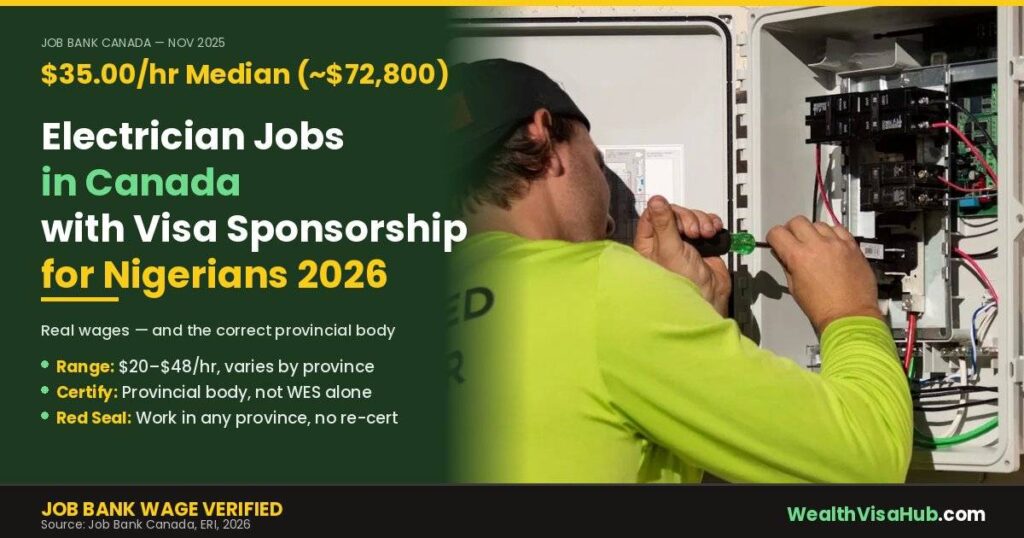
| Electrician | $61,590 – $63,190 / yr | $48,000 – $80,000 | Trade Certificate / Apprenticeship |
| Plumber / Pipefitter | $61,550 – $63,790 / yr | $46,000 – $83,000 | Trade Certificate / Apprenticeship |
| Welder / Fabricator | $56,760 / yr | $42,000 – $75,000 | AWS Certifications / Practical Experience |
| Carpenter | $56,350 – $60,570 / yr | $40,000 – $77,000 | Practical Experience / Framing Skills |
Pay isn’t uniform across the map. Where you land changes everything. Working in New York or California means higher pay, often 20% to 35% above the national baseline, to offset steep rents and taxes. Down south or through the Midwest, base wages might look lower on paper, but your paycheck stretches considerably further.
The Four Main Visa Routes for Foreign Applicants
US immigration draws a sharp distinction between degreed professionals and hands-on trade specialists. Landing construction jobs in USA with visa sponsorship usually means navigating one of four specific routes:
1. The H-1B Visa (Degree Holders) This route is built for university-educated professionals like civil engineers, quantity surveyors, and project managers. The job must explicitly require a specialized bachelor’s degree, and your employer has to pay you the prevailing wage set by the U.S. Department of Labor. You can view full eligibility rules on the USCIS H-1B Specialty Occupations Overview.
2. The EB-3 Green Card (Permanent Residency) If you’re looking for a permanent move, the EB-3 is one of the most reliable long-term immigration channels out there. It covers both degreed professionals and experienced trade specialists. Your sponsoring employers start by submitting a Labor Certification via the U.S. Department of Labor FLAG Portal to prove no local American worker was available for the slot. Once cleared, you’re petitioned directly for permanent residency.
3. The H-2B Temporary Visa (Seasonal & Trade Roles) H-2B covers non-agricultural trade positions like electricians, welders, and carpenters. However, you need to check if your home country is on the annual list of eligible nations published by Homeland Security. If it isn’t listed, your sponsoring U.S. contractor has to file a special “country eligibility exception” showing why hiring you serves the U.S. national interest.
4. The O-1 Visa (Extraordinary Ability) This isn’t for entry-level workers or typical trades. The O-1 is reserved strictly for elite professionals who hold documented national or international recognition in architectural design or complex infrastructure engineering.
Getting Your Credentials and Licenses Approved
Having years of site experience back home won’t automatically let you start working in the States without a few administrative steps.
Degree holders need an official evaluation. Degree holders need an official evaluation. Agencies affiliated with the National Association of Credential Evaluation Services (NACES) review your foreign transcripts to verify they equal an American bachelor’s degree, a step required for both state licensing boards and visa petitions.
For tradespeople, trade licenses in America are strictly managed by individual states and cities. Having internationally recognized proofs, such as American Welding Society (AWS) credentials, makes a massive difference when pitching your skills to sponsoring firms.
Where to Look for Sponsoring Employers
When hunting for construction jobs in USA with visa sponsorship, generic job searches rarely work. You need targeted queries on platforms like LinkedIn and Indeed US, try using exact phrases like “Civil Engineer H-1B Sponsorship” or “Construction Superintendent Visa Sponsorship”.
Direct company directories through trade groups like the Associated General Contractors of America (AGC) are another solid path.
A critical word of advice: Under U.S. law, the hiring employer must pay all mandatory government visa petition fees. If an agency or recruiter asks you to pay for your own petition fees upfront, treat it as a massive red flag. Always cross-check legal representatives against official U.S. state bar association rosters.
Frequently Asked Questions
Can a foreign electrician expect $95,000 right out of the gate? Usually, no. While high-cost metros and specialized industrial gigs can push earnings past $80,000, national medians sit closer to $61,500. For a newcomer entering the U.S. market, $50,000 to $65,000 represents a far more realistic starting range.
Do U.S. contractors pay for your state trade licensing exams? It varies completely by employer. Larger general contractors that regularly sponsor foreign talent often cover test fees or guide you through state onboarding, but you should always insist on having these terms written explicitly into your offer letter.
Summary
Searching for construction jobs in USA with visa sponsorship takes patience, but the long-term payoff is undeniable. Success comes down to setting realistic salary expectations, evaluating your credentials early, and applying through the right legal visa pathways.
Disclaimer: Wealth Visa Hub is an independent educational portal. We are not a construction firm, recruitment agency, or immigration law firm. We are not affiliated with USCIS, the U.S. Department of Labor, or any government embassy.